
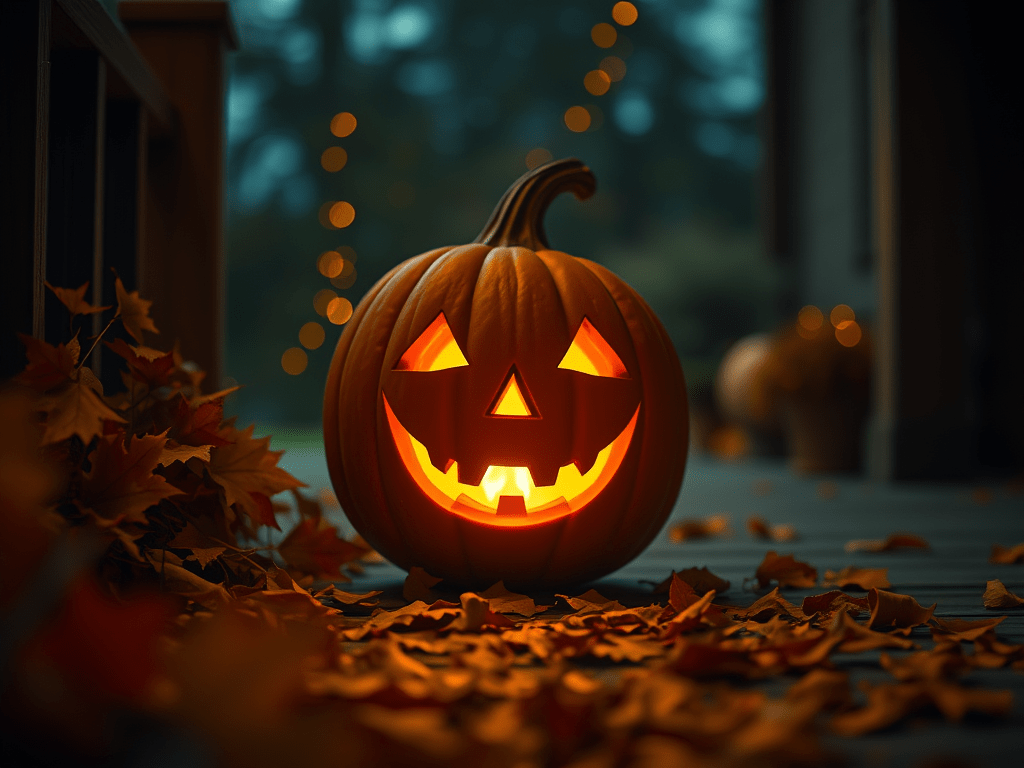
Costumes, candy, scary movies, and pumpkins abound this week as we approach Halloween, but how much history do you know about the holiday?
Halloween’s origins date back to the ancient Celtic festival of Samhain (pronounced sow-in). The Celts, who lived 2,000 years ago, celebrated their new year on November 1. This day marked the end of summer and the harvest and the beginning of the dark, cold winter, a time of year that was often associated with human death.
On the night of October 31, when it was believed that the ghosts of the dead returned to earth, the Celts celebrated Samhain.
In the 700s, the Catholic Church named November 1 “All Saints Day,” and the day before it “All Hallows Eve,” which integrated many of Samhain’s traditions and eventually became today’s version of Halloween.
Now let’s take a look at some of the holiday’s most common traditions:
Decorating Pumpkins
Stingy Jack? One theory revolves around an Irish tradition that uses turnips rather than pumpkins. It is based on a myth about a man named Stingy Jack who frequently trapped the Devil and only released him on the condition that Jack would never go to hell. When Jack died, though, he learned that heaven did not want his spirit either, so he was forced to roam the Earth as a ghost forever. The Devil gave Jack a burning lump of coal in a carved-out turnip to light his way. Locals eventually started carving scary faces into their own turnips to scare away evil spirits.
Costumes
In addition to turnips, pumpkins, and other root vegetables carved with scary faces, the Celts also disguised themselves on Samhain to confuse the evil spirits walking the earth that night.
Trick or Treating
Experts debate the origins of this tradition, but here are their top three theories:
- The Celts would leave food out to appease spirits traveling the earth on Samhain.
- In the Middle Ages, Scotland had a tradition in which children and poor adults would collect food and money from local homes in return for prayers for the dead on All Saints Day.
- A German-American Christmas tradition called “Belsnickle” involved children dressing up and calling on their neighbors to see if the adults could guess their costumes. In one version of the practice, neighbors rewarded children with food or other treats if no one could identify them.

 Smoke Signals
Leave a comment